
Return to the Hummingbird Isle: A 46-Year Journey
After nearly half a century, I had the privilege of returning to Trinidad for the 2025 Christmas and New Year season. Having lived there for four years as a child, I felt a growing pull to revisit my roots and see how the island had evolved.
The spark for the trip came from a former neighbor in Princes Town. She had visited earlier in the year, and her stories triggered a deep nostalgia in me. I reached out to her for the "dos and don’ts" of modern Trinidad; her main advice - to never venture out at night alone and to always stay with "Trinis" - stuck with me. Though I’m not easily intimidated, I kept her caution in the back of my mind.
Navigating the Skies
Living with Sickle Cell Disease means travel requires meticulous planning. According to the CAA, individuals with a haemoglobin level below 9 should use supplemental oxygen on flights exceeding four hours. I learned this the hard way in 1975, when I fell ill within hours of landing in Trinidad, and again four years later upon returning to London. Back then, I was unaware of the medical protocols required for my condition.
Fortunately, modern airlines are far more accommodating. With my oxygen cleared and a wheelchair waiting to assist my "dodgy" knee, the journey was seamless. The moment the cabin doors opened in Port of Spain, that unmistakable, overwhelming Caribbean heat rushed in to greet me - a sensory homecoming.
A Taste of Nostalgia
My driver, Garvin, was a gem. We struck up an immediate rapport on the way to the hotel. After checking in, I couldn't resist a short stroll to a neighboring hotel on the coast. Sitting by the water with a non-alcoholic drink, I had to pinch myself: I had finally made it back.
On Christmas Day, I returned to the waterfront for brunch, eager to reintroduce my palate to flavors I hadn't tasted in decades. I filled my plate with cod kedgeree and pastelles, a savoury meat and cornmeal bundles steamed in banana leaves, and washed it down with fresh soursop juice. My taste buds hadn't been that excited in years.
The Guardian of Banwari Trace
The primary mission of my trip was research. I was fascinated by the Banwari Trace Deposit, the oldest archaeological site in the Caribbean. It’s the resting place of a human skeleton dating back 7,000 years. On New Year’s Eve, my driver drove me south from Port of Spain to Siparia.
When we arrived, my heart sank. The small plot of land was locked behind a metal fence. All I could see was a protective roof, a gazebo-like structure with no walls, covering the excavation site.
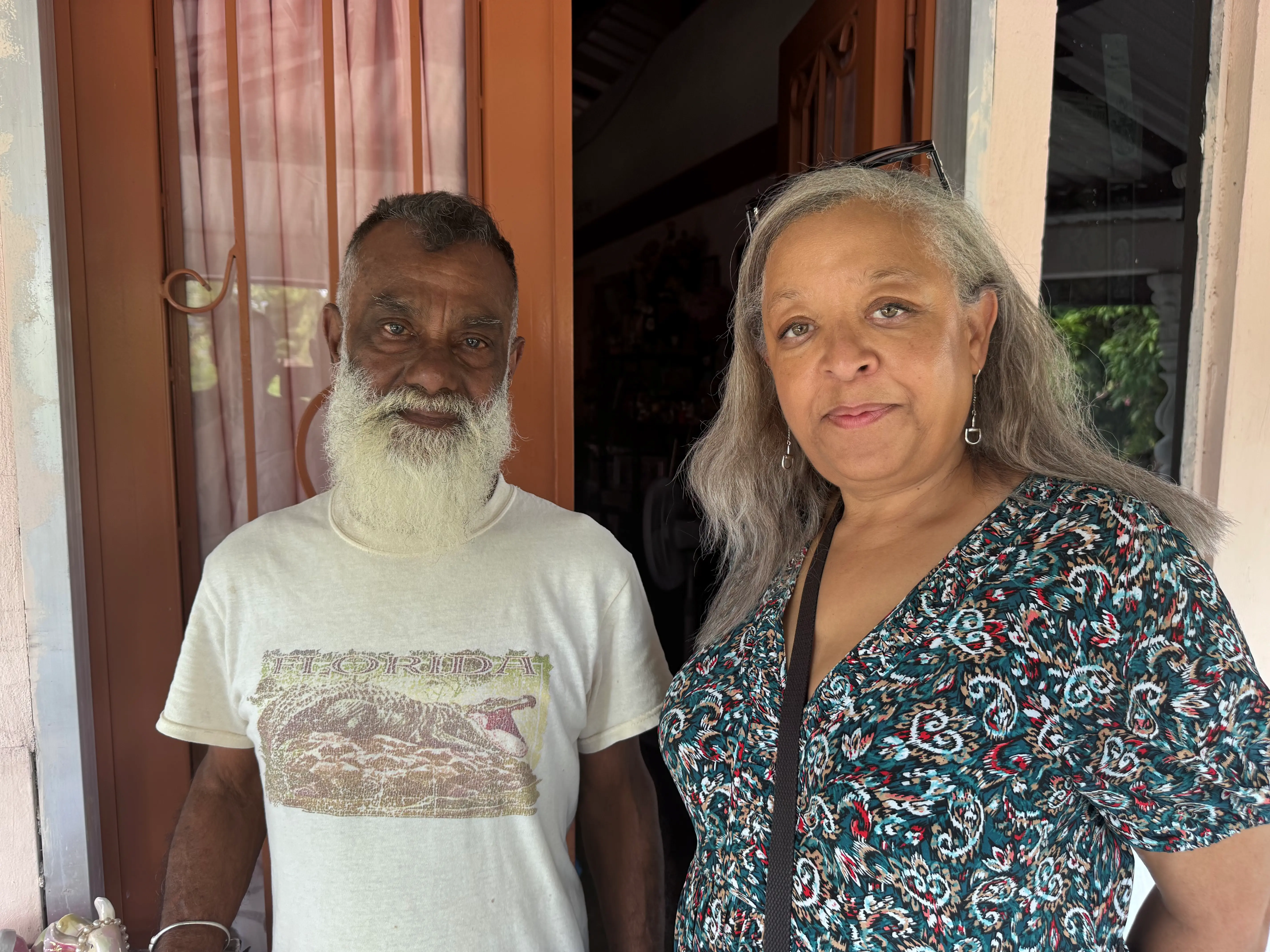
Determined, I noticed a man in the yard of the adjacent house. I waved, and he approached the gate, his dog trailing curiously behind. I asked if he knew the caretaker, and to my surprise, he welcomed me right into his home. His name was Hamlet.
When I explained my interest in pre-Columbian history, Hamlet went inside and emerged with a treasure trove of documents and photographs of relics unearthed at the site. He allowed me to photograph everything. When I tried to offer a monetary gesture of thanks, he firmly declined, saying:
"When it comes to knowledge, the sharing is its own reward."
I was deeply touched. It reminded me of something the late bestselling author Anne Perry, whom I once worked for, used to say: "People, on the whole, are decent." Hamlet was the living embodiment of that truth.
Memories Reclaimed
Before heading back, my driver took me to see an old mud house (also closed, unfortunately), followed by a visit to my old school and my father’s former parish church. Standing before those buildings brought a flood of memories that I look forward to sharing in my next post.
Buy Now